27Oct

The Rise of AI-First Developers: How AI Agents Are Transforming Software Engineering

Software development is entering a new era. The question is no longer simply whether developers use artificial intelligence, but how much of the development process they can successfully delegate to AI agents.

For decades, software engineers have been evaluated primarily on their programming skills, technical expertise, and ability to design and maintain applications.

Today, a new category of professionals is emerging: AI-First Software Engineers.

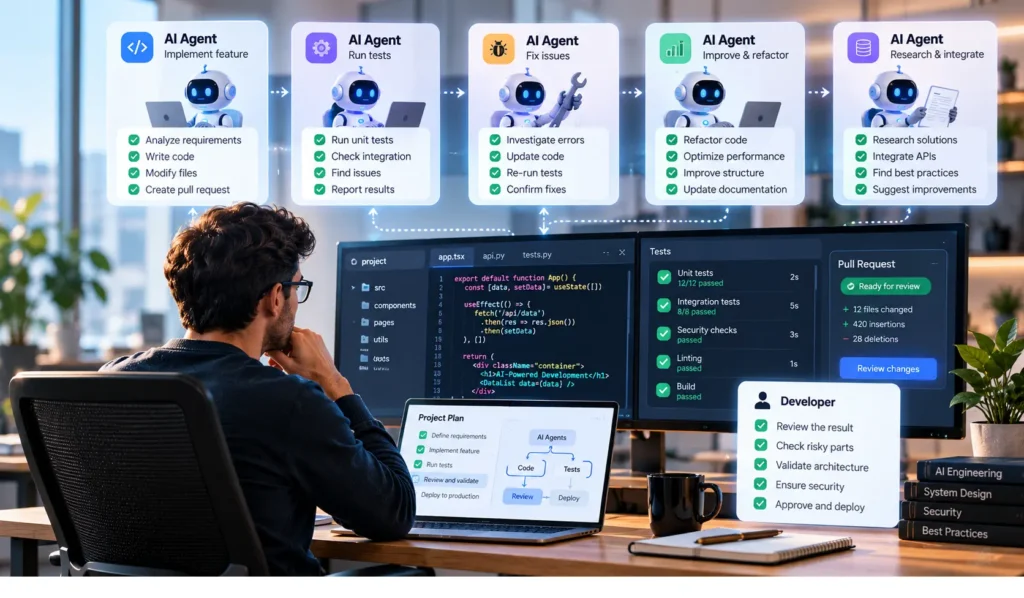
These developers don’t necessarily write every line of code themselves. Instead, they use AI agents to implement features, modify existing applications, generate tests, investigate bugs, and automate development workflows.

The developer’s role increasingly shifts toward defining requirements, making architectural decisions, supervising AI agents, and validating the final results.

At Web Recruiters, we are already observing this change in actual recruitment requests. Some employers are explicitly looking for engineers who allow AI agents to perform most of the coding while retaining human oversight of quality, security, and critical technical decisions.

This raises an important question:

Are we moving from an era of developers who write code to an era of developers who manage systems that write code?

1. Three Types of Software Developers in the AI Era

The adoption of artificial intelligence is creating three broad approaches to software development.

These categories represent different working methods rather than levels of seniority or technical competence.

Traditional Developers: Writing Code Manually

Traditional developers primarily rely on their programming knowledge, development environments, documentation, and established engineering practices.

They write, debug, test, and maintain code themselves, with little or no assistance from generative AI.

Their strengths often include deep familiarity with programming languages, direct control over implementation, and a detailed understanding of the systems they build.

Traditional development remains relevant, particularly in environments involving strict security requirements, specialized technologies, legacy systems, or restrictions on external AI services.

However, as AI tools become more capable, developers who avoid them entirely may face increasing pressure to demonstrate competitive productivity.

AI-Assisted Developers: AI as a Productivity Tool

The second category includes developers who actively use AI to accelerate specific programming tasks.

They might use ChatGPT, Claude, GitHub Copilot, Cursor, or similar tools to:

  • Generate code snippets and individual functions.

  • Explain unfamiliar code.

  • Suggest improvements and refactoring opportunities.

  • Write unit tests and documentation.

  • Identify bugs and troubleshoot errors.

  • Accelerate routine development tasks.

The developer still controls most of the implementation process and frequently writes or modifies code manually.

In this model, AI acts primarily as an assistant.

AI-First Developers: AI Agents as the Primary Implementers


The third category represents a more fundamental change.

AI-first developers organize their workflows around autonomous or semi-autonomous AI coding agents.

Instead of manually implementing every feature, they describe the desired outcome, provide technical context, establish constraints, and delegate implementation to agents.

An AI agent may independently inspect a repository, modify multiple files, run tests, identify errors, and attempt corrections.

The developer then reviews the outcome, evaluates technical decisions, and intervenes where necessary.

The defining characteristic of AI-first development is not simply using AI tools. It is designing a development process in which AI agents perform substantial implementation work.

Importantly, these approaches are not mutually exclusive. An experienced engineer may use agentic workflows for routine implementation while manually handling particularly sensitive or complex components.

2. From Writing Code to Managing AI-Driven Development

One of the most significant changes in software engineering is the redistribution of responsibilities between developers and AI systems.

In traditional development, engineers directly perform most implementation tasks.

In AI-first development, they increasingly become coordinators, reviewers, and technical decision-makers.

A typical AI-driven workflow might include the following stages.

Step 1: Define the business requirements

The engineer analyzes the business problem, identifies the expected functionality, and establishes acceptance criteria.

Step 2: Design the technical approach

The engineer determines architectural constraints, integration requirements, data structures, and implementation priorities.

Step 3: Delegate implementation to AI agents

AI coding agents receive instructions, access the relevant project context, and begin implementing the required functionality.

Step 4: Execute automated validation

The development environment runs tests, linters, static analysis, and other automated quality checks.

Step 5: Review results and critical risks

The engineer examines the generated changes, evaluates architectural decisions, and pays particular attention to security-sensitive or business-critical functionality.

Step 6: Approve, improve, or repeat

Depending on the results, the engineer approves the implementation or instructs the agents to make further changes.

This approach can reduce the amount of routine coding performed manually.

However, successful implementation still depends on the engineer’s ability to understand the system, evaluate the output, and recognize problems that automated checks may miss.

3. What Employers Are Looking for in AI-First Developers

The requirements for AI-first engineering positions are evolving beyond traditional programming skills.

Strong knowledge of programming languages, frameworks, databases, and software architecture remains important.

But employers are increasingly adding requirements related to AI-driven workflows.

Experience with AI Coding Agents

Candidates may be expected to demonstrate practical experience with tools such as:

  • Claude Code

  • OpenAI Codex

  • Cursor

  • GitHub Copilot

  • Other autonomous or agentic coding environments

Employers want to understand how candidates use these tools in real development projects rather than simply whether they have tried them.

Agentic Development Workflows

Relevant experience may include:

  • Delegating complex programming tasks to AI agents.

  • Managing multiple AI agents or parallel development tasks.

  • Providing agents with repository context and technical instructions.

  • Automating testing and validation.

  • Handling agent failures and incorrect implementations.

  • Building repeatable AI-driven development workflows.

Code Review and Risk Management

AI-first developers must be capable of reviewing AI-generated code and identifying potential problems.

Particular attention may be required for:

  • Authentication and authorization.

  • Application security.

  • Payment processing.

  • Database migrations.

  • Data privacy and protection.

  • Infrastructure configuration.

  • Performance-critical components.

  • Business logic and financial calculations.

The goal is not necessarily to manually review every generated line with equal intensity.

Instead, engineers must apply appropriate validation and risk-based review, ensuring that important failures are not overlooked.

Strong Software Engineering Fundamentals

AI-first development does not eliminate the need for engineering expertise.

Developers still need to understand software architecture, APIs, databases, cloud infrastructure, testing, debugging, and production operations.

Without these foundations, it becomes difficult to distinguish a technically sound AI-generated solution from one that merely appears to work.

4. AI Coding Experience vs. LLM Engineering: An Important Distinction

One of the most common sources of confusion in AI-related recruitment is the difference between using AI to develop software and developing software products that incorporate AI.

These are related but distinct skill sets.

AI-First Software Engineering

An AI-first software engineer uses AI agents as part of the software development process.

For example, a Fullstack Developer may use Claude Code or Codex to implement React components, create backend APIs, write tests, and refactor an existing application.

The resulting product does not necessarily contain any AI functionality.

LLM and AI Application Engineering

An LLM Engineer or AI Application Developer builds software that incorporates language models or other AI capabilities.

Relevant requirements may include:

Hands-on experience with OpenAI, Anthropic, or other LLM platforms.

Experience with AI agents, retrieval-augmented generation (RAG), tool calling, prompt engineering, or LLM evaluations.

Experience building conversational AI or workflow automation solutions.

Additional skills may include:

  • LLM API integration.

  • Embeddings and vector databases.

  • Structured model outputs.

  • Agent orchestration frameworks.

  • Model evaluation and monitoring.

  • Context management.

  • AI application security.

  • Cost and latency optimization.

A candidate may be highly experienced in AI-first development without having built an RAG application.

Similarly, an experienced LLM Engineer may develop AI-powered products without relying heavily on autonomous coding agents.

For employers and recruitment agencies, understanding this distinction is essential to identifying the right candidates.

Some positions genuinely require both skill sets, but they should not automatically be treated as interchangeable.

5. The Emergence of AI Harness Engineering

As developers move toward increasingly autonomous AI workflows, another area of expertise is becoming important: AI harness engineering.

An AI development harness is the surrounding infrastructure that enables coding agents to operate within a controlled and repeatable process.

Rather than manually interacting with an AI assistant for every task, engineers may build automated workflows that manage the entire development cycle.

A harness can include:

  • Task preparation and distribution.

  • Agent instructions and context management.

  • Access to repositories and development tools.

  • Automated testing and validation.

  • Error detection and retry mechanisms.

  • Security restrictions and execution boundaries.

  • Logging and monitoring.

  • Human approval checkpoints.

For example, an engineer might trigger a predefined workflow using a Bash script.

That workflow could launch coding agents, provide the necessary instructions, execute tests, collect results, and prepare the changes for review.

The engineer may interact with the automation system rather than directly typing instructions into Claude Code or Codex.

This introduces a new dimension to technical expertise.

The question is no longer only how effectively a developer uses an AI coding tool, but how effectively they design the entire environment in which AI agents operate.

A well-designed harness can make AI-assisted development more repeatable, observable, and manageable.

However, automation alone does not guarantee quality. The effectiveness of the system depends on its constraints, evaluation mechanisms, and human oversight.

6. How Should Companies Evaluate AI-First Developers?

Traditional technical interviews often focus on coding exercises, algorithmic problems, and framework-specific questions.

These assessments can still provide useful information.

However, evaluating AI-first developers may require additional methods.

A candidate’s ability to write code manually does not necessarily demonstrate their ability to manage AI agents effectively.

Likewise, the ability to generate large amounts of code with AI does not automatically indicate strong engineering competence.

Companies should consider evaluating several areas.

AI Workflow Design

Can the candidate explain how they organize an AI-driven development process?

How do they prepare requirements, manage context, and divide complex tasks?

Technical Decision-Making

Can the candidate justify architectural decisions and identify inappropriate solutions suggested by AI?

Code Validation

How does the candidate verify that generated code meets functional, security, and performance requirements?

Failure Handling

What happens when an agent introduces a bug, misunderstands requirements, or repeatedly fails to complete a task?

Engineering Independence

Can the candidate diagnose and resolve critical issues without depending entirely on AI-generated suggestions?

Delivery and Ownership

Can the candidate demonstrate completed projects and explain their personal contribution to the outcome?

One practical assessment could involve asking a candidate to implement a small feature using their preferred AI tools.

The evaluation would focus not only on the final code but also on how the candidate organizes the workflow, validates the results, identifies risks, and explains technical decisions.

The objective is to evaluate engineering judgment and delivery capability, not merely the number of prompts or lines of code generated.

7. How AI-First Development Could Change Software Engineering Teams

The growing capabilities of AI coding agents raise important questions about the future structure of software development teams.

If AI agents can independently perform more implementation tasks, companies may reconsider how engineering work is distributed.

Several developments are possible.

Smaller Teams Delivering More Functionality

Some projects may require fewer engineers to complete a given amount of implementation work.

However, the actual impact will depend on system complexity, quality requirements, and the effectiveness of AI workflows.

Greater Importance of Senior Engineering Judgment

As more code is generated automatically, architectural decisions, risk assessment, and technical oversight may become increasingly valuable.

Senior engineers may spend less time on routine implementation and more time designing systems and validating outcomes.

Changing Expectations for Junior Developers

AI agents can already assist with many tasks traditionally assigned to junior engineers.

This creates a challenge for engineering organizations: how can less experienced developers build practical expertise when routine implementation is increasingly automated?

Junior engineers may need to develop AI collaboration, testing, debugging, and system comprehension skills earlier in their careers.

New Engineering Specializations

Companies may increasingly seek professionals with expertise in agent orchestration, AI development infrastructure, evaluation systems, and automated software delivery.

These responsibilities may become part of existing engineering roles or develop into more specialized positions.

Productivity Must Be Measured by Outcomes

AI-generated code volume is not a reliable measure of engineering productivity.

More meaningful indicators include delivery time, defect rates, maintainability, operational reliability, and the total cost of developing and supporting software.

The long-term value of AI-first development will depend on measurable improvements in these outcomes.

8. How AI-First Development Is Changing IT Recruitment

For recruitment agencies, the emergence of AI-first engineering introduces new challenges.

Traditional candidate screening often relies on years of experience, programming languages, frameworks, and previous job titles.

These criteria remain relevant but may no longer provide a complete picture.

Two developers with similar technical backgrounds may have very different levels of experience with autonomous AI development.

One may use AI occasionally to generate code snippets.

Another may have built an automated development environment in which AI agents implement features, execute tests, and prepare changes for production review.

Their CVs may look similar, but their workflows and capabilities can be substantially different.

Recruiters therefore need to ask more specific questions.

How does the candidate use AI in daily development?

Which tasks are delegated to agents?

What level of autonomy do those agents have?

How are generated changes validated?

How does the candidate handle critical technical decisions?

What measurable results have they achieved?

These questions help distinguish basic familiarity with AI tools from meaningful experience in AI-driven software engineering.

9. Recruiting AI-First Developers with Web Recruiters

At Web Recruiters, we help companies identify and recruit software engineers with the technical expertise and practical experience required for modern development environments.

As AI becomes more deeply integrated into software engineering, we recognize the importance of evaluating candidates beyond traditional programming skills.

Depending on project requirements, companies may need:

  • AI-First Fullstack Developers.

  • AI-Assisted Software Engineers.

  • Agentic Software Developers.

  • LLM Engineers.

  • AI Application Developers.

  • Engineers experienced in AI workflow automation and agent orchestration.

Our recruitment approach focuses on understanding the client’s actual technical needs and identifying candidates whose experience matches those requirements.

Whether a company needs engineers who use AI to accelerate traditional development or specialists who build autonomous AI-powered systems, defining the right candidate profile is an essential first step.

Looking for AI-First Software Engineers?

Web Recruiters helps companies find and hire developers who combine strong software engineering expertise with practical experience in AI-driven development.

We support IT recruitment, staff augmentation, and dedicated development team requirements for companies across international markets.

Contact Web Recruiters to discuss your hiring needs and find the right AI engineering talent for your team.

Conclusion: The Future Developer May Write Less Code — but Take More Responsibility

Artificial intelligence is changing how software is designed, implemented, tested, and maintained.

For some developers, AI remains a productivity assistant.

For others, autonomous agents are becoming central to the entire development process.

The most significant transformation may not be the automation of coding itself, but the changing role of the software engineer.

Developers increasingly need to combine technical knowledge with the ability to direct AI systems, evaluate their output, and maintain responsibility for the software they deliver.

For employers, this creates new opportunities — and new hiring challenges.

For developers, it creates new ways to work, new skills to master, and new expectations to meet.

And for IT recruitment, it introduces an important question:

Will the most valuable software engineer of tomorrow be the person who writes the best code, or the person who builds the most effective system for AI agents to write, test, and maintain it?

The answer may depend on the project.

But one thing is becoming clear: understanding how developers work with AI is increasingly important when evaluating software engineering talent.

27Oct

Entry Level Roles Should Never Mean Dead End Jobs

Entry-level work should give employees a foundation for building skills, earning greater responsibility and pursuing higher pay. Yet many organizations treat these positions as permanent sources of low-cost labor. That approach creates disengaged teams and recurring vacancies while pushing capable people toward employers with clearer development plans.

Recruiters and hiring managers can prevent this cycle by defining advancement from the start. Candidates should understand what they can learn, how performance will be measured and which roles may become available after they prove themselves.

The Trap of Dead End Hiring

A dead-end role usually reveals itself through vague promises. A manager may mention future growth without naming the next position, the skills it requires or a realistic promotion timeline. Candidates can use a practical dead-end job checklist to identify warning signs before accepting an offer.

Employers should review entry-level job descriptions for the same problems. Replace phrases such as “growth opportunities available” with specific details. For example, explain that an assistant can qualify for a coordinator role after completing required training and meeting six-month performance targets. During interviews, recruiters should also introduce candidates to employees who advanced internally. Concrete examples carry more credibility than broad assurances.

Mapping Clear Upward Trajectories

Build a simple career map for every high-volume entry role. It should identify the next two or three positions, expected time frames and measurable requirements. Managers can then discuss that map during onboarding and revisit it in scheduled development meetings.

A healthcare employer, for example, might show how patient care experience, training and mentorship support progression toward advanced clinical work. People exploring healthcare careers at Royal Ambulance can see how an emergency medical services position may connect with longer-term goals, such as becoming a paramedic, nurse or physician.

Career maps need more than job titles. Include required certifications, technical abilities and workplace behaviors. If employees must demonstrate leadership before promotion, give them opportunities to train a new colleague or coordinate a small project.

Proven Pathways in Critical Fields

Structured advancement has particular value in healthcare, technology, skilled trades and other fields where practical experience builds professional ability. On-the-job experience research from McKinsey highlights how work experience can contribute substantially to lifetime earnings. Employers should treat everyday assignments as part of that development.

A supervisor might rotate a new employee through several responsibilities during the first 90 days, then assign focused training based on performance and interest. Pairing that employee with an experienced mentor creates another source of instruction and feedback.

Recruiters should explain these pathways with evidence. Share the percentage of supervisors hired internally, typical promotion time and examples of training completed during paid hours. Candidates can then evaluate the opportunity on specific facts.

Tracking Long Term Employee Loyalty

Retention data shows whether an advancement program works. Track turnover by role, manager and employee tenure, then compare those figures with promotion rates and training participation. If many employees leave between months six and nine, delayed development conversations or unclear eligibility rules may be contributing to the problem.

Stay interviews can uncover concerns before someone resigns. Ask employees which skills they want to build, what blocks their progress and whether they understand the requirements for their next role. Managers should document answers and follow up with specific assignments or training dates.

Promotion quality matters too. Monitor performance after internal moves and compare it with external hires. Strong results can support continued investment in mentorship while weak results may expose gaps in preparation.

An entry-level job earns employee commitment when its next steps are visible and credible. Put promotion criteria in writing, assign managers responsibility for development discussions and report internal mobility alongside turnover. Those practices turn early-career hiring into a dependable source of experienced talent.

17Jun

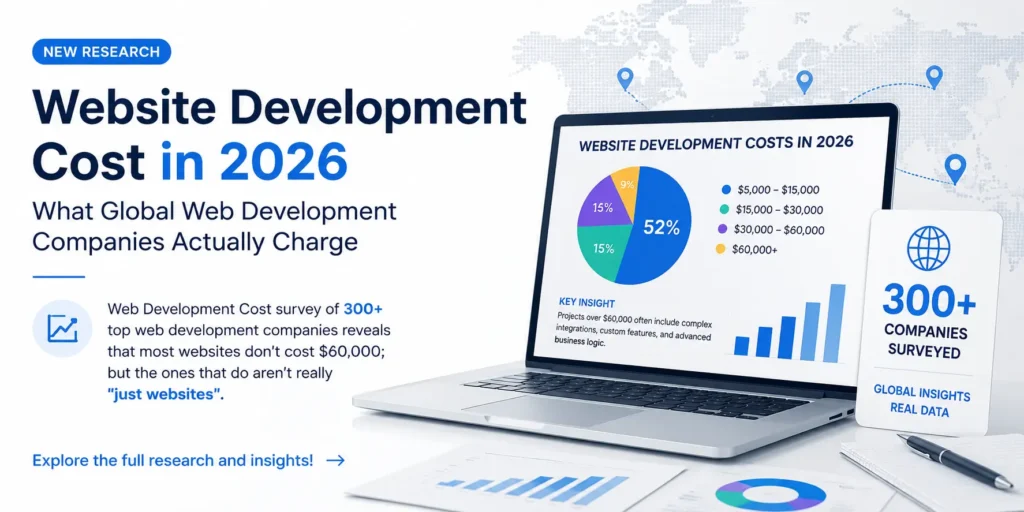
Website Development Cost in 2026: What Global Web Development Companies Actually Charge by Goodfirms

How much does website development actually cost in 2026?

The latest research based on data from 300+ web development companies worldwide reveals an interesting insight: most business websites cost significantly less than $60,000. However, projects that exceed this budget are usually much more than “just websites” — they often include complex integrations, custom business logic, scalable architectures, and advanced user experiences.

If you’re planning a new website or digital platform, understanding current market pricing can help you set realistic expectations and avoid costly mistakes.

Read the full research and discover what web development companies are actually charging in 2026.

08Jun

Some of our other partners

Below you will find some of our other partners

At PK Women’s Specialist Clinic, we are here to take care of your women’s health issues with compassion and empathy in a personalized way you deserve.

we help Singapore drivers choose the right EV, hybrid, SUV and passenger car tyres for better wet grip, comfort and confident driving.

Our mission is to provide innovative security solutions that enhance safety and efficiency in both commercial buildings and private properties. We understand the growing need for advanced surveillance and access control systems in today’s urban landscape, where safety and security are paramount. By leveraging cutting-edge technology, we aim to deliver peace of mind to property owners and managers, ensuring that their assets are protected and that their environments are secure.

23Feb

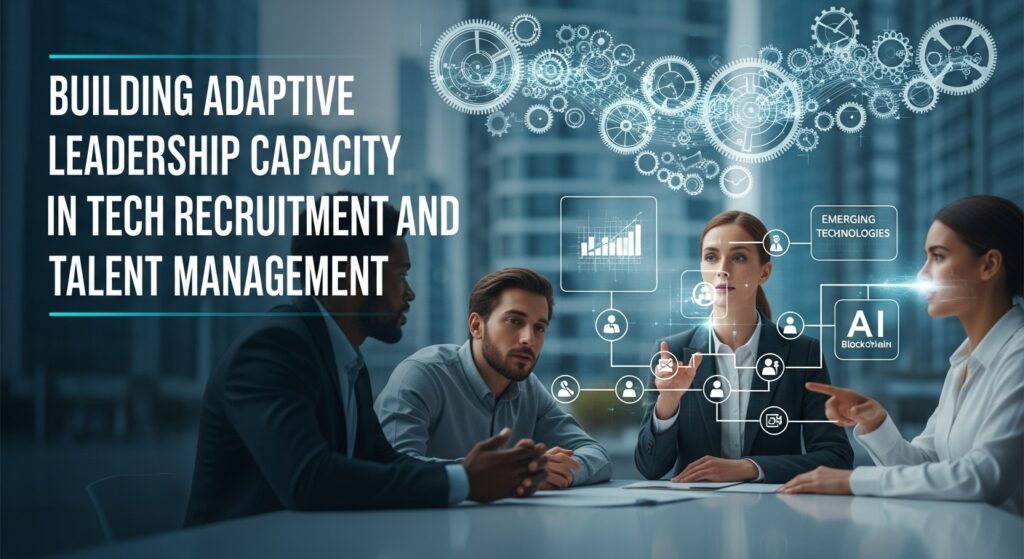
Building Adaptive Leadership Capacity in Tech Recruitment and Talent Management

30 seconds summary

  • Building adaptive leadership capacity in tech recruitment and talent management means equipping leaders to respond quickly to rapid change in skills, technology, and workforce expectations.
  • It focuses on agility over rigid planning using data-driven hiring, continuous learning, and inclusive decision-making to navigate uncertainty.
  • Adaptive leaders empower teams, experiment with new talent models, and align recruitment strategies with evolving business goals, ensuring organizations can attract, develop, and retain critical tech talent in a fast-moving market.

The technology sector is characterized by rapid innovation, volatile labor markets, evolving skill requirements, and increasing social expectations around equity and inclusion. Within this environment, traditional leadership models, often rooted in predictability, hierarchy, and linear planning, are proving insufficient. Nowhere is this more evident than in tech recruitment and talent management, where leaders must navigate constant disruption, global competition for skills, and complex human systems. As a result, organizations are increasingly turning toward adaptive leadership as a framework for building leadership capacity capable of responding effectively to uncertainty and change.

Adaptive leadership, particularly when viewed through the lens of complex adaptive systems, emphasizes learning, experimentation, distributed authority, and the ability to mobilize people to tackle challenges for which there are no clear technical solutions. In tech recruitment and talent management, these challenges include skills shortages, bias in hiring systems, evolving workforce expectations, and persistent gender inequities, especially at senior leadership levels. Within this context, executive coaching for women has emerged as a critical intervention for developing adaptive capacity, supporting identity work, and addressing structural barriers embedded in organizational systems.

This essay explores how adaptive leadership can be developed and sustained in tech recruitment and talent management. It examines leadership in complex adaptive systems, analyzes the unique challenges of talent management in the technology sector, and argues for executive coaching particularly for women as a powerful mechanism for cultivating adaptive leadership capacity and advancing more inclusive organizational outcomes.

Adaptive Leadership and Complex Adaptive Systems

Add Your Heading Text Here

Adaptive leadership, as articulated by scholars such as Heifetz, Grashow, and Linsky, is not defined by authority or position but by the capacity to mobilize people to confront complex challenges. Unlike technical problems, where solutions are known and expertise can be applied, adaptive challenges require changes in values, beliefs, roles, and relationships. Solutions must be discovered through learning, experimentation, and collective engagement.

In practice, adaptive leadership involves:

  • Diagnosing the system rather than reacting to surface symptoms
  • Regulating distress to keep people productively engaged
  • Giving work back to the system rather than centralizing control
  • Protecting voices of leadership from below
  • Experimenting, reflecting, and adjusting in real time

These capabilities are especially relevant in technology-driven environments where change is constant and outcomes are unpredictable.

Organizations as Complex Adaptive Systems

Organizations, particularly in the technology sector, function as complex adaptive systems. Such systems are characterized by multiple interacting agents, non-linear relationships, feedback loops, and emergent outcomes that cannot be predicted by analyzing individual components in isolation. In complex systems, small interventions can have disproportionate effects, and attempts at top-down control often produce unintended consequences.

Recruitment and talent management systems exemplify this complexity. Hiring decisions are influenced not only by job descriptions and candidate qualifications but also by informal networks, organizational culture, unconscious bias, labor market dynamics, and technological tools such as applicant tracking systems and AI-driven screening software. Changes in one part of the system, such as introducing a new diversity initiative or altering performance metric,s can ripple unpredictably across the organization.

Adaptive leadership within complex systems requires leaders to shift from a mindset of control to one of sensemaking, facilitation, and learning. Leaders must be able to observe patterns, test hypotheses, and adjust strategies based on feedback rather than relying on fixed plans.

The Challenges of Tech Recruitment and Talent Management

Volatility and Skills Scarcity

The technology labor market is defined by chronic skills shortages, particularly in areas such as artificial intelligence, cybersecurity, cloud computing, and data science. Skills become obsolete quickly, and organizations must constantly reassess what talent they need and how to attract it. Traditional workforce planning models struggle to keep pace with these dynamics.

Adaptive leaders in recruitment must therefore balance short-term hiring pressures with long-term capability building. This requires experimentation with non-traditional talent pipelines, reskilling initiatives, and flexible career pathways approaches that demand comfort with uncertainty and ongoing learning.

Bias and Inequity in Hiring Systems

Despite widespread commitments to diversity and inclusion, the technology sector continues to struggle with gender imbalance, particularly in leadership roles. Women, and especially women from marginalized backgrounds, face systemic barriers throughout the talent lifecycle from recruitment and selection to promotion and retention.

These inequities are not merely the result of individual bias but are embedded within complex systems. Job descriptions may reflect masculine-coded language, referral-based hiring can reproduce homogeneity, and performance evaluations may privilege behaviors aligned with dominant leadership norms. Addressing these challenges requires adaptive leadership that can surface uncomfortable truths, challenge entrenched assumptions, and engage stakeholders in systemic change.

Changing Workforce Expectations

The modern tech workforce increasingly values purpose, flexibility, psychological safety, and opportunities for growth. Remote and hybrid work models, accelerated by global disruptions, have further transformed how talent is attracted and managed. Leaders must navigate tensions between organizational needs and employee expectations, often without clear precedents or best practices.

Adaptive leadership enables leaders to hold these tensions productively, engage in dialogue, and co-create solutions rather than imposing rigid policies that may undermine trust and engagement.

Building Adaptive Leadership Capacity in Talent Leaders

From Expertise to Learning Orientation

Many leaders in tech recruitment and talent management rise through the ranks based on technical expertise or past success in stable environments. However, adaptive leadership requires a fundamental shift from being the expert with answers to being a facilitator of learning. Leaders must cultivate curiosity, humility, and the ability to ask generative questions.

This shift is particularly challenging in high-performance cultures where certainty and decisiveness are rewarded. Building adaptive capacity, therefore, involves not only skill development but also identity wor,k helping leaders redefine what it means to add value in complex systems.

Distributed Leadership and Collaboration

In complex adaptive systems, leadership is distributed rather than centralized. Adaptive capacity is enhanced when organizations empower recruiters, hiring managers, and employees at all levels to experiment, share insights, and influence decision-making. This approach contrasts with hierarchical models that concentrate authority at the top.

Talent leaders play a crucial role in creating conditions for distributed leadership by designing processes that encourage collaboration, feedback, and cross-functional learning. This includes rethinking governance structures, performance metrics, and communication channels to support adaptability.

Psychological Safety and Experimentation

Adaptive leadership depends on psychological safety and the shared belief that it is safe to take interpersonal risks, voice concerns, and admit uncertainty. In recruitment and talent management, where decisions are highly visible and mistakes can be costly, fear of failure can inhibit experimentation.

Leaders must model vulnerability, normalize learning from failure, and protect those who challenge the status quo. Doing so enables organizations to test new approaches, learn quickly, and adapt to changing conditions.

Executive Coaching as a Mechanism for Adaptive Leadership Development

The Role of Executive Coaching

Executive coaching has become a prominent tool for leadership development in complex environments. Unlike traditional training programs, coaching is individualized, reflective, and grounded in real-time organizational challenges. It provides leaders with a confidential space to explore assumptions, experiment with new behaviors, and integrate learning into practice. From an adaptive leadership perspective, coaching supports leaders in:
  • Developing systems awareness
  • Regulating emotional responses to uncertainty
  • Engaging stakeholders in adaptive work
  • Navigating identity shifts and role transitions These outcomes are particularly valuable in tech recruitment and talent management, where leaders must operate at the intersection of strategy, human dynamics, and rapid change.

Coaching Women Leaders in Technology

Executive coaching holds particular significance for women leaders in the technology sector. Women often navigate additional adaptive challenges related to gender norms, bias, and underrepresentation. They may face heightened scrutiny, conflicting expectations, and limited access to informal networks of power. Coaching provides a space for women to:
  • Make sense of systemic barriers without internalizing blame
  • Strengthen adaptive responses to bias and resistance
  • Develop authentic leadership identities that do not require conformity to dominant norms
  • Build confidence in exercising authority within complex systems
Importantly, effective executive coaching for women does not focus solely on individual skill deficits but situates personal development within the broader organizational and societal context.

Intersection of Coaching and Systemic Change

While executive coaching is often framed as an individual intervention, its impact can extend to systemic change when aligned with organizational goals. Coaches working with women leaders in talent and recruitment roles can support adaptive leadership by helping clients identify leverage points within the system, engage allies, and experiment with new practices that promote equity.

For example, a coached leader may pilot changes to hiring processes, challenge biased decision-making norms, or advocate for structural reforms. Through reflective practice and experimentation, coaching becomes a catalyst for both personal and organizational adaptation.

Integrating Adaptive Leadership, Talent Systems, and Gender Equity

Building adaptive leadership capacity in tech recruitment and talent management requires an integrated approach that acknowledges complexity, prioritizes learning, and addresses systemic inequities. Executive coaching for women is a critical component of this approach, but it must be embedded within a broader commitment to organizational change. Organizations that succeed in this endeavor tend to:
  • View leadership development as an ongoing adaptive process rather than a one-time intervention
  • Invest in coaching and development for leaders at multiple levels
  • Align talent systems with values of inclusion, learning, and flexibility
  • Encourage experimentation and feedback across recruitment and talent practices
By doing so, they create conditions in which adaptive leadership can flourish and where diverse leaders are empowered to shape the future of work.

Conclusion

The challenges facing tech recruitment and talent management are complex, systemic, and continually evolving. Traditional leadership models are ill-equipped to address these realities, necessitating a shift toward adaptive leadership grounded in an understanding of complex adaptive systems. Building adaptive leadership capacity enables organizations to respond more effectively to volatility, navigate uncertainty, and foster inclusive talent ecosystems.

Executive coaching, particularly for women leaders, plays a vital role in this process. By supporting identity work, systems thinking, and adaptive experimentation, coaching helps leaders develop the capabilities needed to influence change within complex organizational environments. When integrated thoughtfully into talent and leadership strategies, coaching can contribute not only to individual growth but also to more equitable and adaptive organizations.

Ultimately, building adaptive leadership capacity in tech recruitment and talent management is not about finding definitive answers. It is about cultivating the ability to learn, adapt, and lead collectively in the face of ongoing complexity, an imperative that will only grow in importance as the technology sector continues to evolve.

19Jan

How Online Reviews Influence Buying Decisions in 2026

Online reviews have become one of the most powerful factors influencing consumer buying behavior worldwide. According to recent global insights published by GoodFirms, customers increasingly rely on reviews to evaluate credibility, quality, and trustworthiness before making a decision.

The research highlights that:

  • Most buyers read multiple reviews before choosing a service provider
  • Authentic feedback often outweighs traditional marketing messages
  • Transparency and real customer experience significantly impact trust

For businesses, this means that online reputation is no longer optional — it is a core part of growth strategy. Collecting honest feedback, responding to reviews, and continuously improving services based on client input are key to staying competitive in today’s digital market.

Read the full research here: https://www.goodfirms.co/

22Dec

Merry Christmas and Happy New Year 2026

Merry Christmas and Happy New Year 2026!

The holiday season has a special way of bringing people together and reminding us of the things that truly matter. At Web Recruiters, working and helping people is our passion—supporting our clients, finding the right talent, and collaborating to build meaningful and impactful projects.

Thank you for being part of our journey this year and for sharing our commitment to creating new services and opportunities for many people. We truly value our partnership with you.

We wish you a warm and peaceful holiday season, and a New Year filled with inspiration, memorable moments, continued growth, major achievements, and successful projects in the year ahead.

Warm regards,
Web Recruiters’ team

03Dec

Web Recruiters Recognized Among Leading Cloud Transformation Consulting Companies of 2025 by Techreviewer.co

We at Web Recruiters are excited to announce that we have been recognized as one of the top cloud transformation consulting companies of 2025 by Techreviewer.co. This honor reflects our expanding role beyond IT staffing and recruitment, recognizing our growing expertise in supporting clients not only with talent acquisition but also with cloud migration, infrastructure setup, DevOps, and cloud-native software development. As the demand for cloud transition, flexible remote teams, and reliable cloud-enabled platforms increases across industries, this acknowledgment validates our vision of combining human expertise with modern cloud solutions to deliver end-to-end value. 

Since 2014, Web Recruiters has built a strong reputation as an IT recruitment, staff-augmentation, and software development partner serving clients across the USA, Europe, and other regions. Our core services include IT web recruitment, dedicated teams or staff augmentation, and full-cycle software development for web, mobile, and enterprise applications. Over time, we have evolved, integrating cloud and infrastructure services, DevOps, and cloud migration consulting into our portfolio, recognizing that modern software success depends on both code and robust backend infrastructure.

What Web Recruiters Brings to Cloud Transformation Projects

We believe that enabling a successful cloud transformation requires more than simply shifting workloads – it demands the right people, the right infrastructure, and the right execution strategy. At Web Recruiters, we combine our deep IT-talent network with technical delivery and cloud consulting to give clients a one-stop solution for building, migrating, and scaling applications. Our key strengths include:

  • IT Staff Augmentation and Dedicated Teams. We supply experienced developers, DevOps/cloud engineers, architects, and full-stack specialists to build out cloud-native applications or support migrations.
  • Software Development with Cloud & Infrastructure Services. From business analysis and frontend/backend development to DevOps, cloud migration, infrastructure security, and long-term support – we deliver full lifecycle software services that are cloud-ready.
  • Flexible, Customizable Team Models and Remote Delivery. Our staffing model and global talent network allow clients to scale teams quickly, adapt to changing requirements, and support remote or hybrid workflows – a key advantage for modern cloud-based projects. 

Fast Time-to-Market and Cost Efficiency. By bridging recruitment, development, and infrastructure consulting, we help clients avoid fragmentation of vendors, reducing overhead, accelerating delivery, and aligning teams under one partner.

What This Recognition Means for Us

Being named among the top cloud transformation consulting companies by Techreviewer.co is a milestone that validates our evolving mission. It highlights that Web Recruiters is not just a staffing agency, but a full-fledged partner capable of addressing modern technology challenges – cloud migrations, scalable infrastructure, DevOps, and delivery of cloud-native software products. This recognition strengthens our commitment to:
  • Maintaining high standards of technical expertise and recruitment quality
  • Expanding our cloud consulting, architecture, and DevOps capabilities
  • Delivering integrated, end-to-end solutions – from recruiting talent to deploying and maintaining production cloud environments
  • Supporting clients’ growth by offering flexible, responsive, and reliable partnership 
We believe this honor will reassure both current and future clients that they are working with a team capable of delivering comprehensive cloud-transformation support, combining people, process, and infrastructure in one cohesive offering.

Our Vision Forward

As cloud technologies evolve and demand grows for scalable, secure, cost-effective infrastructure – especially for distributed teams, SaaS products, and global enterprises – Web Recruiters is poised to grow with those demands. In the coming months and years, we plan to:

  • Expand our pool of expert cloud engineers, DevOps specialists, and architects to support complex migrations and cloud-native projects
  • Strengthen our internal capabilities around cloud architecture consulting, security, compliance, and infrastructure automation
  • Offer hybrid service packages combining talent recruitment, dedicated development teams, cloud consulting, DevOps automation, and long-term managed support
  • Help clients move legacy systems or on-prem applications to modern cloud-based architectures with minimal disruption


Our goal remains to offer clients an end-to-end path from concept through production, supported by both talent and infrastructure, enabling organizations to innovate faster and more reliably.

A Note of Thanks

We extend our deepest gratitude to our clients, partners, and every member of the Web Recruiters team. This recognition belongs to you – your trust, collaboration, and shared vision for growth have made it possible. We remain committed to delivering the highest quality of service, and to supporting organizations worldwide as they embrace cloud transformation, build robust systems, and scale their digital capabilities.

About Techreviewer.co

Techreviewer.co is a respected research and analytics platform that evaluates technology and consulting companies across domains including cloud consulting, software development, IT outsourcing, DevOps, and digital transformation. Their curated rankings, such as the top cloud transformation consulting companies list, are based on rigorous evaluation of service quality, technical expertise, client feedback, market presence, and overall performance. Being listed among their top firms serves as a mark of excellence and reliability for clients seeking trusted technology partners.

01Dec

Custom Software Development Cost Survey 2026 — Key Insights

Custom Software Development Cost Survey 2026 — Key Insights

GoodFirms has published a new study on global trends in custom software development costs for 2026. The report presents up-to-date data on average developer rates, project costs across different complexity levels, common collaboration models, used technologies, and the key factors influencing development budgets.

This research is useful for companies planning to build or scale digital products and want to understand market benchmarks, optimize budgets, and choose the right development model.

Read more: Custom Software Development Cost Survey 2026

07Oct

AI is reshaping healthcare—from diagnostics to personalized treatment

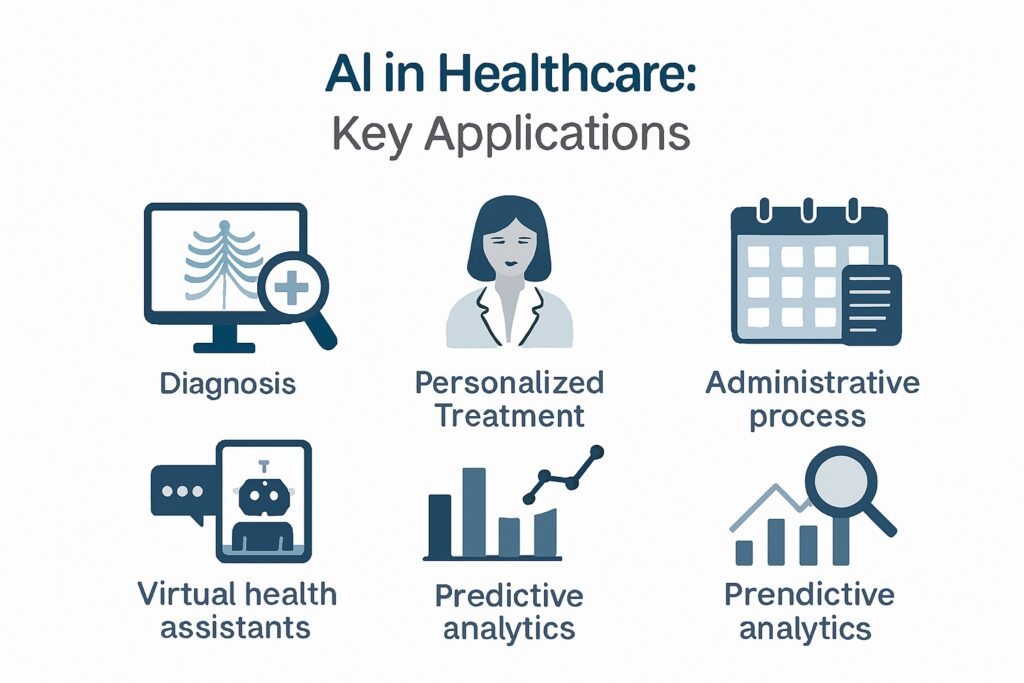
The GoodFirms resource titled “AI in Healthcare: The Future of Patient Care & Management” offers a concise yet insightful look into how AI technologies are transforming the medical landscape. It highlights:

  • Predictive analytics that help anticipate patient risks and improve early intervention.
  • AI-powered diagnostics that enhance accuracy and reduce human error.
  • Virtual health assistants and chatbots that streamline communication and support.
  • Automation in administrative tasks, freeing up time for medical professionals.
  • Ethical and regulatory challenges that must be addressed for safe implementation.

Whether you’re a healthcare provider, tech innovator, or policy strategist, this article provides a forward-looking perspective on how AI is driving smarter, more efficient, and patient-centric care